
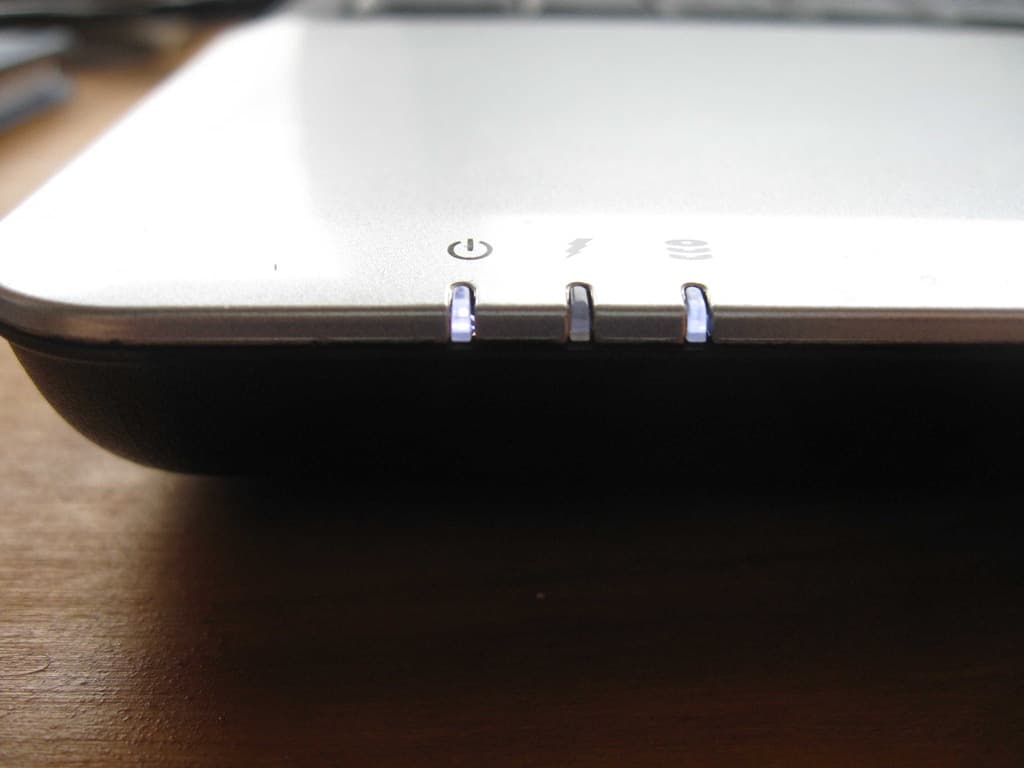
A team of Israeli researchers has devised a new technique to exfiltrate data from a machine by using a malware that controls hard drive LEDs.
Across the years, numerous studies demonstrated that it is possible to exfiltrate data from air-gapped networks in various ways and security experts warned to cover our webcam to avoid being spied by sophisticated malware.
Now a group of researchers from Ben-Gurion University of the Negev’s Cyber Security Research Center has devised a new technique to exfiltrate data from a machine by using a malware that controls hard drive LEDs.
“We show that a malware can indirectly control the HDD LED, turning it on and off rapidly (up to 5800 blinks per second) – a rate that exceeds the visual perception capabilities of humans. Sensitive information can be encoded and leaked over the LED signals, which can then be received remotely by different kinds of cameras and light sensors.” reads the paper published by the researchers. “Compared to other LED methods, our method is unique, because it is also covert – the HDD activity LED routinely flickers frequently, and therefore the user may not be suspicious to changes in its activity.”
The malware is able to transmit information forcing the LED indicators to blink, the group of experts led by the notorious researcher Mordechai Guri was able to flash the LED at around 5,800 on/off cycles per second as a data channel, a speed that allows transferring 4 Kbps.
The attackers can force the LEDs to blink at a rate of up to 6,000 times per second, which is indiscernible for human’s eyes, but potentially readable for light sensors.
“It’s possible for the attacker to do such fast blinking that a human never sees it,” explained Guri.
Of course, the attackers need to infect the target machine prior to the transmission.
The efficiency of the exfiltration technique depends on the abilities of the receiver components, it might be a Digital SLR or high-end security camera (15 bps), a GoPro-level camera (up to 120 bps), a Webcam or Google Glass Explorer (also 15 bps), or a smartphone camera (up to 60 bps).
In the following table are reported the Maximum bandwidth of different receivers:


The researchers published a video PoC of the technique in which a drone equipped with a receiver exfiltrated the data by flying out to a window through which the infected disk was visible and the LED was blinking.
The experts explained that it is very simple to control the hard disk LED due to the lack of generic API to control it. The malware just needs to perform a series of read/write operations to the disk in order to make the LED blinking at specific frequencies. On the other end, the receiver has to run a software that interprets the signals.
Below the portion of pseudocode that allows the data transmission by flashing the HDD lamp.

Even if the technique is very sophisticated an obvious countermeasure is the application of a cover on the computer’s LEDs, the experts mentioned other countermeasures but let me suggest to read their interesting paper for further details.
[adrotate banner=”9″]
(Security Affairs – air-gapped network, hacking)


