Researchers reported that Dark Pink APT employed a malware dubbed KamiKakaBot against Southeast Asian targets.
In February 2023, EclecticIQ researchers spotted multiple KamiKakaBot malware samples that were employed by the Dark Pink APT group (aka Saaiwc) in attacks against government entities in Southeast Asia countries.
The activity of the group was first detailed by Group-IB in January 2023, the group used custom malware such as KamiKakaBot and TelePowerBot.
The Dark Pink APT is active in the ASEAN region and has been active since at least mid-2021. The group focuses on military and government organizations to steal sensitive information, including confidential data and intellectual property.
The main difference between the January campaign and the attacks spotted by EclecticIQ is that the threat actors have improved the malware’s obfuscation routine to avoid detection.
The researchers noticed overlaps in malware delivery and adversary techniques between Earth Yako and Dark Pink APT groups, including the use of Winword.exe for DLL Hijacking.
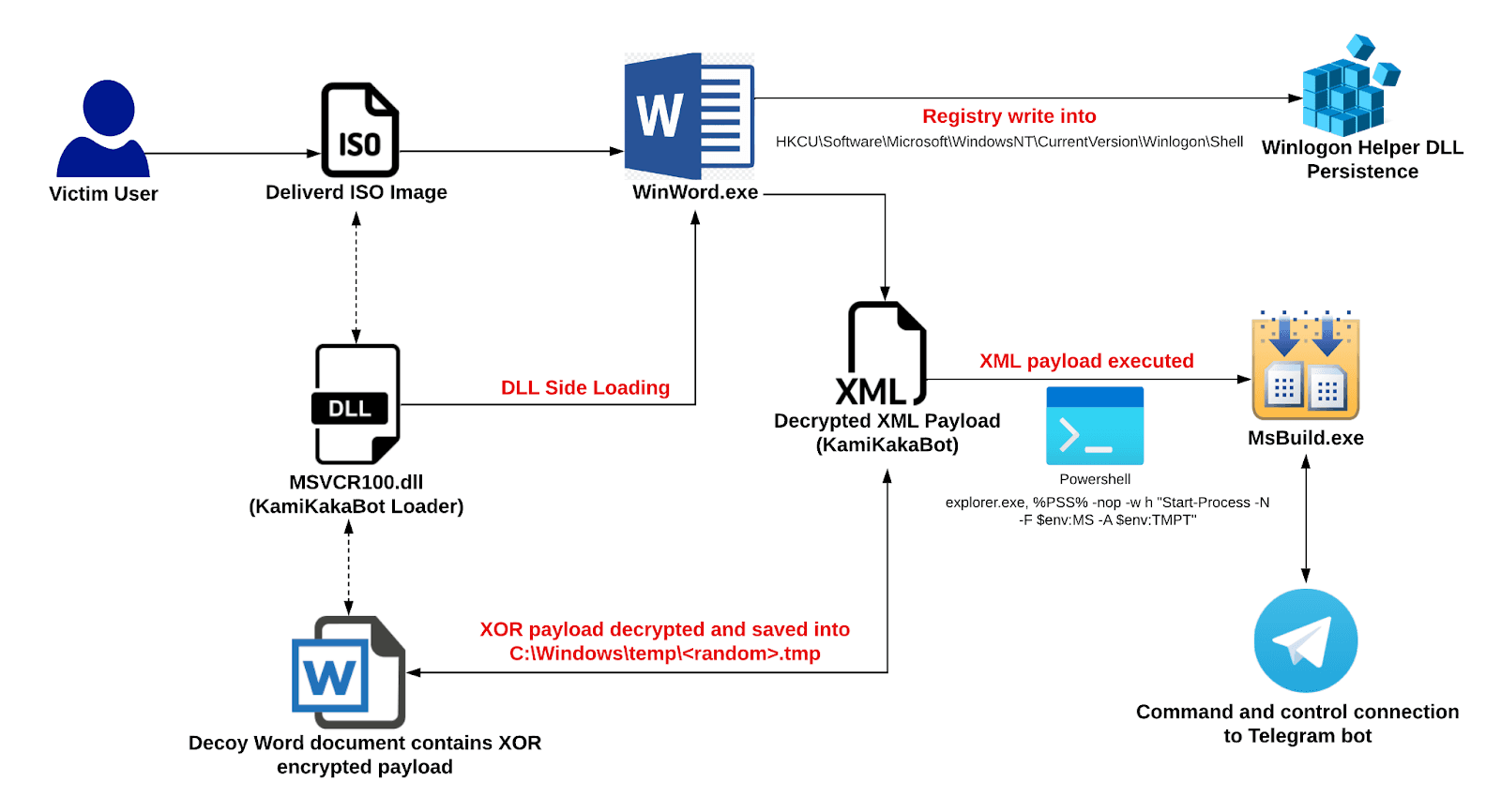
The KamiKakaBot malware spreads via phishing emails that contain a malicious ISO file as an attachment. The ISO image file contains a WinWord.exe which is legitimately signed by Microsoft, which is used to launch DLL side-loading attack, a loader (MSVCR100.dll), and a decoy Microsoft Word document. Upon clicking on WinWord.exe, the loader is executed in the memory of WinWord.exe.
The malware gain persistence via a registry key into HKCU\Software\Microsoft\Windows NT\CurrentVersion\Winlogon\Shell used to abuse features of Winlogon (Windows component).
“The ISO file also contains a decoy Word document that has an XOR-encrypted section. The KamiKakaBot loader uses this section to decrypt the XOR-encrypted content from the decoy file then writes the decrypted XML KamiKakaBot payload into the disk (C:\Windows\temp) and executes it via a living-off-the-land binary called MsBuild.exe.” reads the analysis published by EclecticIQ.
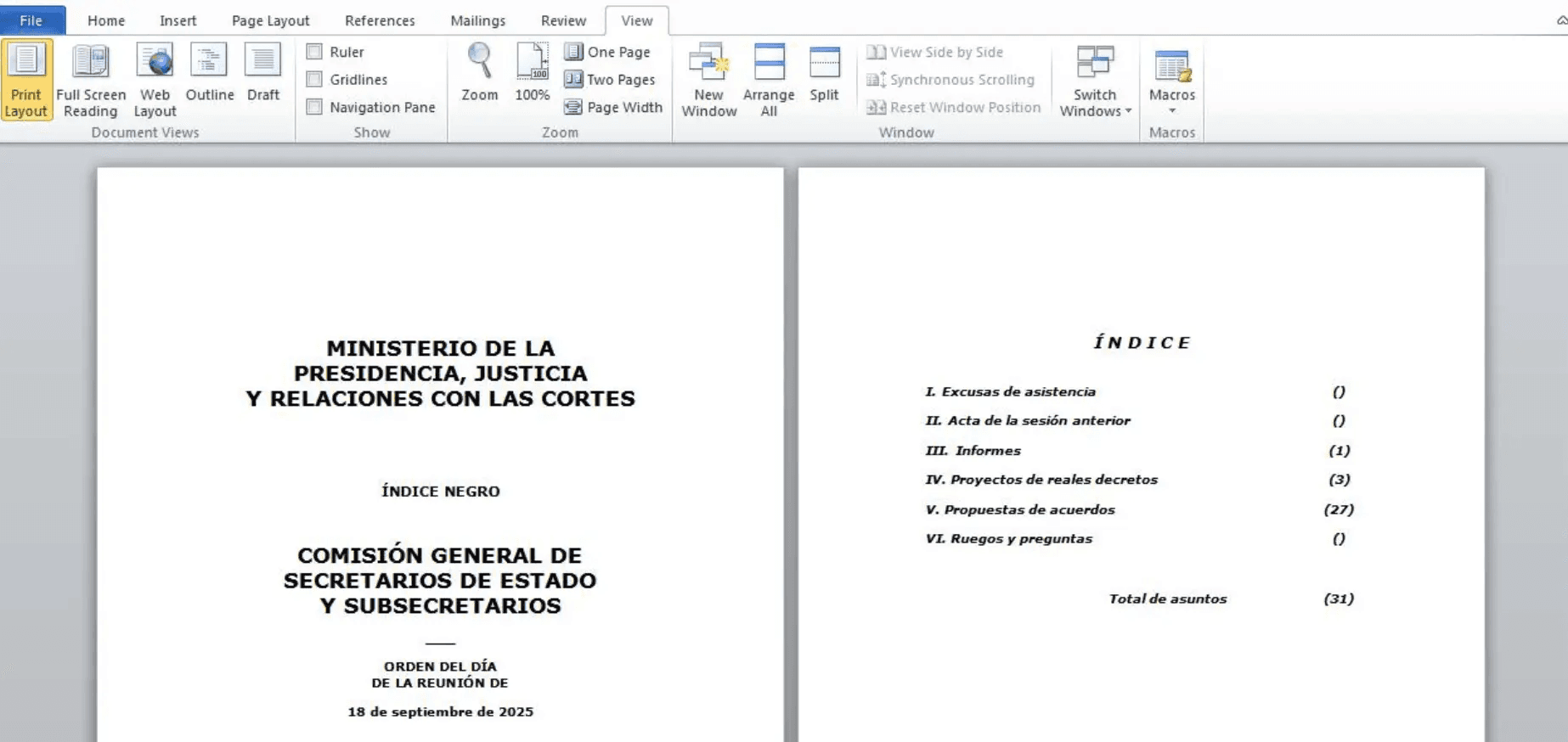
The attackers employed different lures in each decoy Word document to trick their victims into opening the attachment.
“Before the execution of the decrypted XML payload, KamiKakaBot loader writes a registry key into HKCU\Software\Microsoft\Windows NT\CurrentVersion\Winlogon\Shell to abuse features of Winlogon (Windows component) for establishing persistent access.”
KamiKakaBot can steal data stored in popular web browsers, including Chrome, MS Edge, and Firefox. Then the stolen data is sent to the attackers’ Telegram bot channel in a compressed ZIP format.
The malware also supports an update mechanism and can perform remote code execution on the targeted device. The C2 communication relies on a Telegram bot controlled by the threat actor.

The experts believe the Dark Pink APT group is likely a cyber espionage threat actor that focuses on the relationship between ASEAN and European nations to create phishing lures.
“The result of the analysis showed that the threat actors are still utilizing the same adversary tactics, techniques, and procedures (TTPs) to deliver and execute the KamiKakaBot malware, with only small changes made to the obfuscation routine to increase the infection rate and evade anti-malware solutions.” concludes the report. “Based on the TTPs used in this campaign, EclecticIQ researchers strongly believe that the Dark Pink APT group is very likely a cyber espionage-motivated threat actor that specifically exploits relations between ASEAN and European nations to create phishing lures during the February 2023 campaign.”
Follow me on Twitter: @securityaffairs and Facebook and Mastodon
(SecurityAffairs – hacking, Dark Pink APT)