Security Affairs
Ransomware Never Stopped: Over 9,000 Confirmed Attacks Since 2018|222 GitHub Repositories Linked to Fake Go Package Malware Operation|Former Ransomware Negotiator Sentenced to 70 Months in Prison for Secretly Helping BlackCat Gang|GigaWiper Merges Three Malware Families Into One Destructive Backdoor|INTERPOL Operation First Light Nets 5,811 Arrests and Seizes $293 Million|GodDamn Ransomware Uses PoisonX to Blind Security Software|AssuranceAmerica Breach Exposes 7 Million Driver’s Licenses After Employee Account Hack|Microsoft fixed Defender flaw RoguePlanet (CVE-2026-50656)|Fake VPN and 7-Zip Apps Turn Victims Into Residential Proxy Nodes|Ubiquiti Patches Critical UniFi OS Flaws Allowing Command Injection and Privilege Escalation|A Hacker Claims 35 GB of Accenture Source Code. The Company discloses the data breach|Telegram-Hosted RedWing Malware Lets Anyone Rent Android Spyware Tools|Ransomware Never Stopped: Over 9,000 Confirmed Attacks Since 2018|222 GitHub Repositories Linked to Fake Go Package Malware Operation|Former Ransomware Negotiator Sentenced to 70 Months in Prison for Secretly Helping BlackCat Gang|GigaWiper Merges Three Malware Families Into One Destructive Backdoor|INTERPOL Operation First Light Nets 5,811 Arrests and Seizes $293 Million|GodDamn Ransomware Uses PoisonX to Blind Security Software|AssuranceAmerica Breach Exposes 7 Million Driver’s Licenses After Employee Account Hack|Microsoft fixed Defender flaw RoguePlanet (CVE-2026-50656)|Fake VPN and 7-Zip Apps Turn Victims Into Residential Proxy Nodes|Ubiquiti Patches Critical UniFi OS Flaws Allowing Command Injection and Privilege Escalation|A Hacker Claims 35 GB of Accenture Source Code. The Company discloses the data breach|Telegram-Hosted RedWing Malware Lets Anyone Rent Android Spyware Tools|
Advertisement

Ad Placeholder

Full Width × 90

Breaking News

Hackers stole $41M worth of crypto assets from crypto gambling firm Stake

Crypto gambling site Stake suffered a security breach, and threat actors withdrew $41M of funds stolen including Tether and Ether. Researchers reported abnormally large withdrawals made from the crypto gambling site Stake to an account with no previous activity, a circumstance that suggests that threat actors have hacked the platform and stolen crypto assets, including […]

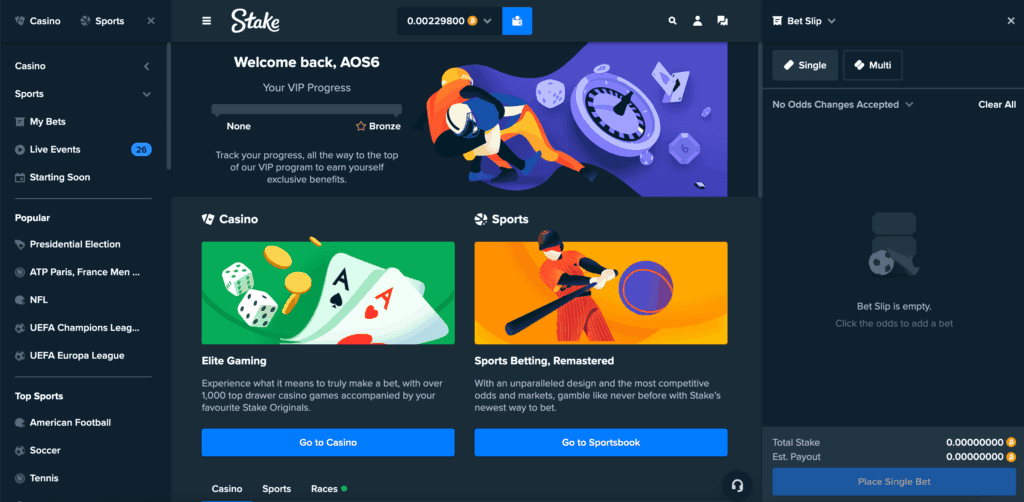
Stake crypto gambling site

Crypto gambling site Stake suffered a security breach, and threat actors withdrew $41M of funds stolen including Tether and Ether.

Researchers reported abnormally large withdrawals made from the crypto gambling site Stake to an account with no previous activity, a circumstance that suggests that threat actors have hacked the platform and stolen crypto assets, including Tether and Ether.

Stake.com offers traditional casino games (such as slots, blackjack and roulette) and sports betting. It offers video streams with live dealers. Users on Stake.com typically do not deal with traditional currencies, instead they deposit and withdraw cryptocurrencies to and from their betting account. Account balances can be withdrawn in the equivalent value of cryptocurrency and then deposited back into the user’s personal cryptocurrency wallet.

Stake crypto gambling site

The crypto gambling site confirmed the attack on Twitter:

“Three hours ago, unauthorised tx’s were made from Stake’s ETH/BSC hot wallets” reads the statement. “We are investigating and will get the wallets up as soon as they’re completely re-secured. User funds are safe. BTC, LTC, XRP, EOS, TRX + all other wallets remain fully operational.”

The withdrawals were made on September 4, and the account used by the threat actors was called “Stake.com Hacker” by Etherscan.

“Crypto gambling site Stake experienced $41 million in withdrawals on Sept. 4 in what blockchain security analysts have called “suspicious outflows.” The withdrawing account has been labeled “Stake.com Hacker” by Etherscan, implying that the drained funds may be the result of a stolen private key.” reads the report published by the CoinTelegraph.

Smart contract audit service Beosin reported that the attackers also drained funds using other chains, including 17.8 M from BNB Smart Chain (BSC) and 7.8M from Polygon. 

The analysis of the Blockchain data reveals that threat actors performed very large withdrawals from Stake.com contracts into the alleged attacker’s account.

Once the attackers drained the funds, they distributed them to multiple accounts.

Ed Craven, Stake co-founder, attempted to reassure their clients explaining that only a small portion of its crypto reserves is maintained in hot wallets.

The company will restore the affected wallets shortly.

Follow me on Twitter: @securityaffairs and Facebook and Mastodon

Pierluigi Paganini

(SecurityAffairs – hacking, crypto gambling)