Security Affairs
Daxin: 13-Year-Old China-Linked Malware Found Still Active on Manufacturer’s Network|U.S. CISA adds Fortinet FortiSandbox and Microsoft SharePoint flaws to its Known Exploited Vulnerabilities catalog|Ernst & Young (EY) Investigates Data Breach Involving Third-Party Support Tickets|A cyberattack hit Nichirei, one of Japan’s largest food companies|New Russian Campaign Uses Fake Webex and Zoom Installers to Deploy Starland RAT|U.S. CISA adds KNX Association KNX Protocol Connection Authorization Option 1 and Oracle flaws to its Known Exploited Vulnerabilities catalog|Two Scattered Spider Members Sentenced to Prison Over £29 Million TfL Cyberattack|TuxBot v3: The IoT Botnet Built With AI – Bugs, Disclaimers and All|Claude Code and DeepSeek Powered Chinese Cyber Espionage Campaign|Zoom Fixes CVE-2026-53412, a Critical Account Takeover Bug|US and allied Governments’ Recommendations: Securing Network Devices Against Russian APT Groups|Chaotic Eclipse Unveils LegacyHive Exploit Affecting Fully Patched Windows Systems|Daxin: 13-Year-Old China-Linked Malware Found Still Active on Manufacturer’s Network|U.S. CISA adds Fortinet FortiSandbox and Microsoft SharePoint flaws to its Known Exploited Vulnerabilities catalog|Ernst & Young (EY) Investigates Data Breach Involving Third-Party Support Tickets|A cyberattack hit Nichirei, one of Japan’s largest food companies|New Russian Campaign Uses Fake Webex and Zoom Installers to Deploy Starland RAT|U.S. CISA adds KNX Association KNX Protocol Connection Authorization Option 1 and Oracle flaws to its Known Exploited Vulnerabilities catalog|Two Scattered Spider Members Sentenced to Prison Over £29 Million TfL Cyberattack|TuxBot v3: The IoT Botnet Built With AI – Bugs, Disclaimers and All|Claude Code and DeepSeek Powered Chinese Cyber Espionage Campaign|Zoom Fixes CVE-2026-53412, a Critical Account Takeover Bug|US and allied Governments’ Recommendations: Securing Network Devices Against Russian APT Groups|Chaotic Eclipse Unveils LegacyHive Exploit Affecting Fully Patched Windows Systems|
Advertisement

Ad Placeholder

Full Width × 90

Breaking News

Crooks target US universities with malware used by nation-state actors

Several US universities and colleges were targeted in phishing attacks aimed at delivering malware previously used by China-linked APT groups. Faculty and students at several U.S. universities and colleges were targeted in phishing attacks, threat actors attempted to infect the victims’ systems with a remote access Trojan (RAT) previously used by Chinese state-sponsored hackers. The […]

US universities phishing lures

Several US universities and colleges were targeted in phishing attacks aimed at delivering malware previously used by China-linked APT groups.

Faculty and students at several U.S. universities and colleges were targeted in phishing attacks, threat actors attempted to infect the victims’ systems with a remote access Trojan (RAT) previously used by Chinese state-sponsored hackers.

The malicious code employed in the attacks is the Hupigon RAT, a RAT previously spotted in campaigns carried out by China-linked APTs such as APT3 (aka TG-0100BuckeyeGothic Panda, and UPS).

Hupigon is a remote access Trojan (RAT) that has been active since at least 2006, it was first detected by FireEye in 2010.

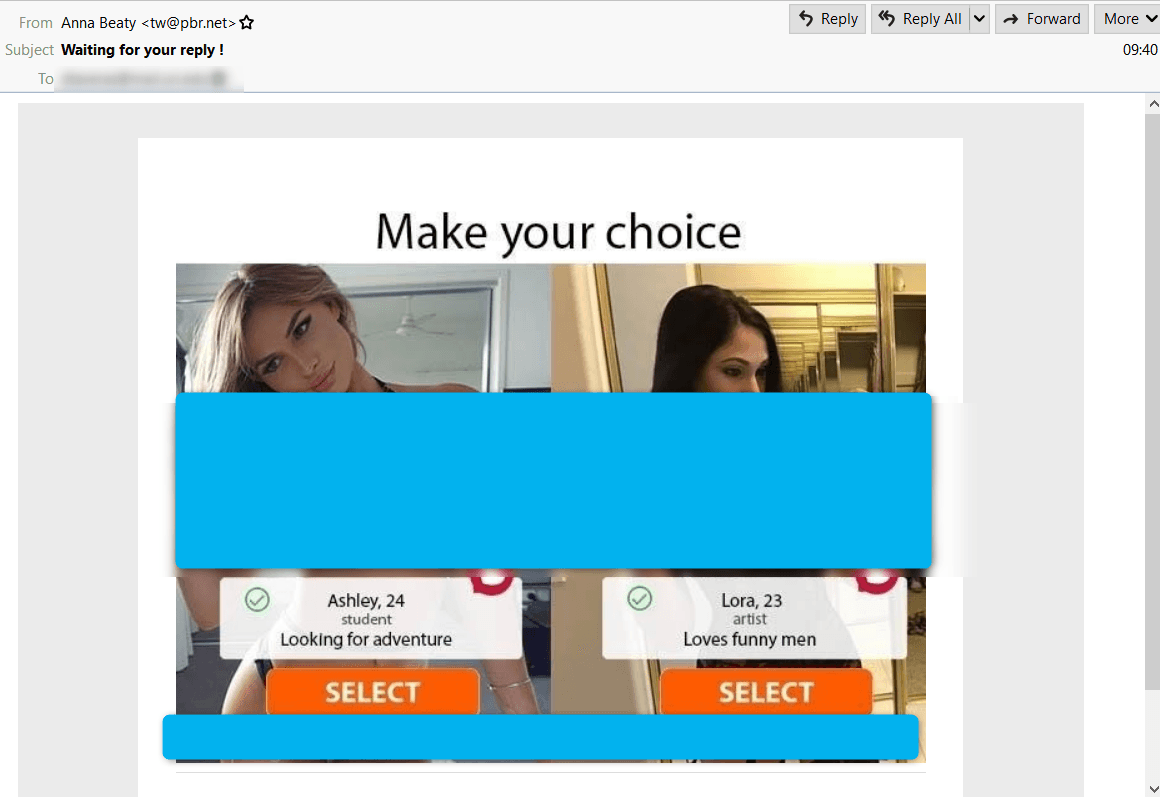
The campaign targeting the US universities uses adult dating lures.

“Messages arrive obfuscated as adult dating lures requesting the user to choose between one of two pictures to connect with by clicking the link under their picture,” reads the analysis published by Proofpoint.

US universities phishing lures

Once the victim has clicked on one of the two links in the content of the message, the infection chain will start by downloading an executable used as a dropper for the Hupigon RAT.

The malware allows the attacker to take full control of the infected system, it could be used to steal sensitive personal information, to take screenshots, and audio recordings, and to control the webcam.

Most of the messages associated with this phishing campaign were observed between April 14 and April 15, Proofpoint researchers observed roughly 80,000 messages, coinciding with an observed rotation in payload.

Researchers believe this campaign is financially motivated, this opinion is based on the distribution methods and message volumes.

‘This campaign delivered over 150,000 messages to over 60 different industries, with 45% focused on education, colleges, and universities,” Proofpoint concluded.

“These attacks demonstrate the inverse relationship of commoditized RATs incorporated into criminal and state-sponsored campaigns over time. In this case, cybercriminals repurposed an attack tool leveraged by state-sponsored threat actors among other. In this particular case, this is a general crimeware-based campaign.”

Additional technical details were reported in the analysis published by Proofpoint, including indicators of compromise (IOCs).

Please give me your vote for European Cybersecurity Blogger Awards – VOTE FOR YOUR WINNERS
https://docs.google.com/forms/d/e/1FAIpQLSe8AkYMfAAwJ4JZzYRm8GfsJCDON8q83C9_wu5u10sNAt_CcA/viewform

[adrotate banner=”9″][adrotate banner=”12″]

Pierluigi Paganini

(SecurityAffairs – US universities, phishing)

[adrotate banner=”5″]

[adrotate banner=”13″]