
Europe Confirms Record €4.1B Penalty Against Google for Android Practices|U.S. CISA adds a Microsoft SharePoint Server flaw to its Known Exploited Vulnerabilities catalog|430,000 FortiGate Devices Exposed in FortiBleed Ransomware Link|Adobe fixed multiple maximum-severity flaws in ColdFusion and Campaign Classic|Alleged Scattered Spider Hacker Extradited to U.S. to Face Cybercrime Charges|Oracle E-Business Suite Flaw Under Active Attack, 950 Systems Exposed|Azure CLI Targeted in LSHIY Password Spray Campaign Across 64 Orgs|CISA Warns BlueHammer Flaw Is Now Exploited in Ransomware Attacks|RustDuck: The Botnet That’s Still Small but Engineering Like It Plans to Grow|GuardFall Flaw Hits 10 of 11 Popular Open-Source AI Agents|XSS.is, The Forum That Ran the Ransomware Supply Chain Is Down. The Market Isn’t|U.S. CISA adds SimpleHelp flaw to its Known Exploited Vulnerabilities catalog|Europe Confirms Record €4.1B Penalty Against Google for Android Practices|U.S. CISA adds a Microsoft SharePoint Server flaw to its Known Exploited Vulnerabilities catalog|430,000 FortiGate Devices Exposed in FortiBleed Ransomware Link|Adobe fixed multiple maximum-severity flaws in ColdFusion and Campaign Classic|Alleged Scattered Spider Hacker Extradited to U.S. to Face Cybercrime Charges|Oracle E-Business Suite Flaw Under Active Attack, 950 Systems Exposed|Azure CLI Targeted in LSHIY Password Spray Campaign Across 64 Orgs|CISA Warns BlueHammer Flaw Is Now Exploited in Ransomware Attacks|RustDuck: The Botnet That’s Still Small but Engineering Like It Plans to Grow|GuardFall Flaw Hits 10 of 11 Popular Open-Source AI Agents|XSS.is, The Forum That Ran the Ransomware Supply Chain Is Down. The Market Isn’t|U.S. CISA adds SimpleHelp flaw to its Known Exploited Vulnerabilities catalog|
Advertisement

Ad Placeholder

Full Width × 90

Breaking News

Experts observed a spike in COVID-19 related malspam emails containing GuLoader

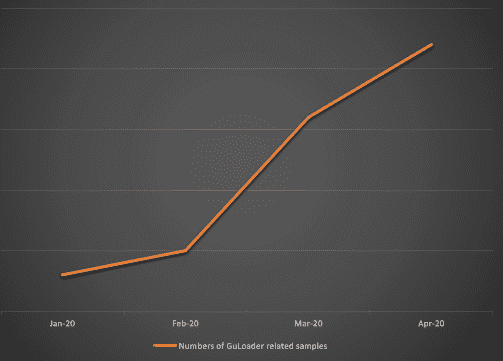
Security experts observed a spike in the use of the GuLoader since March 2020 while investigating COVID-19-themed malspam campaigns. Researchers from Vipre Labs observed a spike in the use of GuLoader in COVID-19-themed campaign since March 2020. The discovery confirms that crooks continue to use COVID-19 lures in malspam campaigns. In the campaign monitored by […]

GuLoader

Security experts observed a spike in the use of the GuLoader since March 2020 while investigating COVID-19-themed malspam campaigns.

Researchers from Vipre Labs observed a spike in the use of GuLoader in COVID-19-themed campaign since March 2020.

GuLoader

The discovery confirms that crooks continue to use COVID-19 lures in malspam campaigns. In the campaign monitored by Vipre Labs, attackers used spam email samples containing GuLoader.

The GuLoader is a popular RAT that appeared in the threat landscape in 2019 and that was involved in other COVID-19 campaigns, it is written in VB5/6 and compressed in a .rar/.iso file. 

GuLoader is usually employed in spam campaigns using bill payments, wire transfers or COVID lures.

In the last campaign observed by experts, the downloader utilizes cloud hosting services to keep the payload encrypted.

“This malware downloader utilizes cloud hosting services like Microsoft OneDrive or Google Drive to keep its payload encrypted. Also, GuLoader is used to download Remote Access Trojan (RAT) or files that allow attackers to control, monitor, or steal information on the infected machine.” reads the analysis.

The malware implements anti-analysis techniques, such as an anti-debugger. In order to achieve persistence, GuLoader creates a folder in which to place a copy of itself and modifies a registry key.

Now the loader implements process hollowing and use the child processes to download, decrypt, and map the payload into memory.

Common payloads downloaded by the loader are Formbook, NetWire, Remcos, Lokibot, and others.

The analysis published by Vipre Labs includes technical details about the threats, including Indicators of Compromise (IoCs).

In early March, experts at MalwareHunterTeam uncovered a COVID-19-themed campaign that was distributing the GuLoader malware to deliver the FormBook information-stealing Trojan.

The campaign was using emails that pretend to be sent by members of the World Health Organization (WHO).

[adrotate banner=”9″][adrotate banner=”12″]

Pierluigi Paganini

(SecurityAffairs – COVID-19, malspam)

[adrotate banner=”5″]

[adrotate banner=”13″]


