
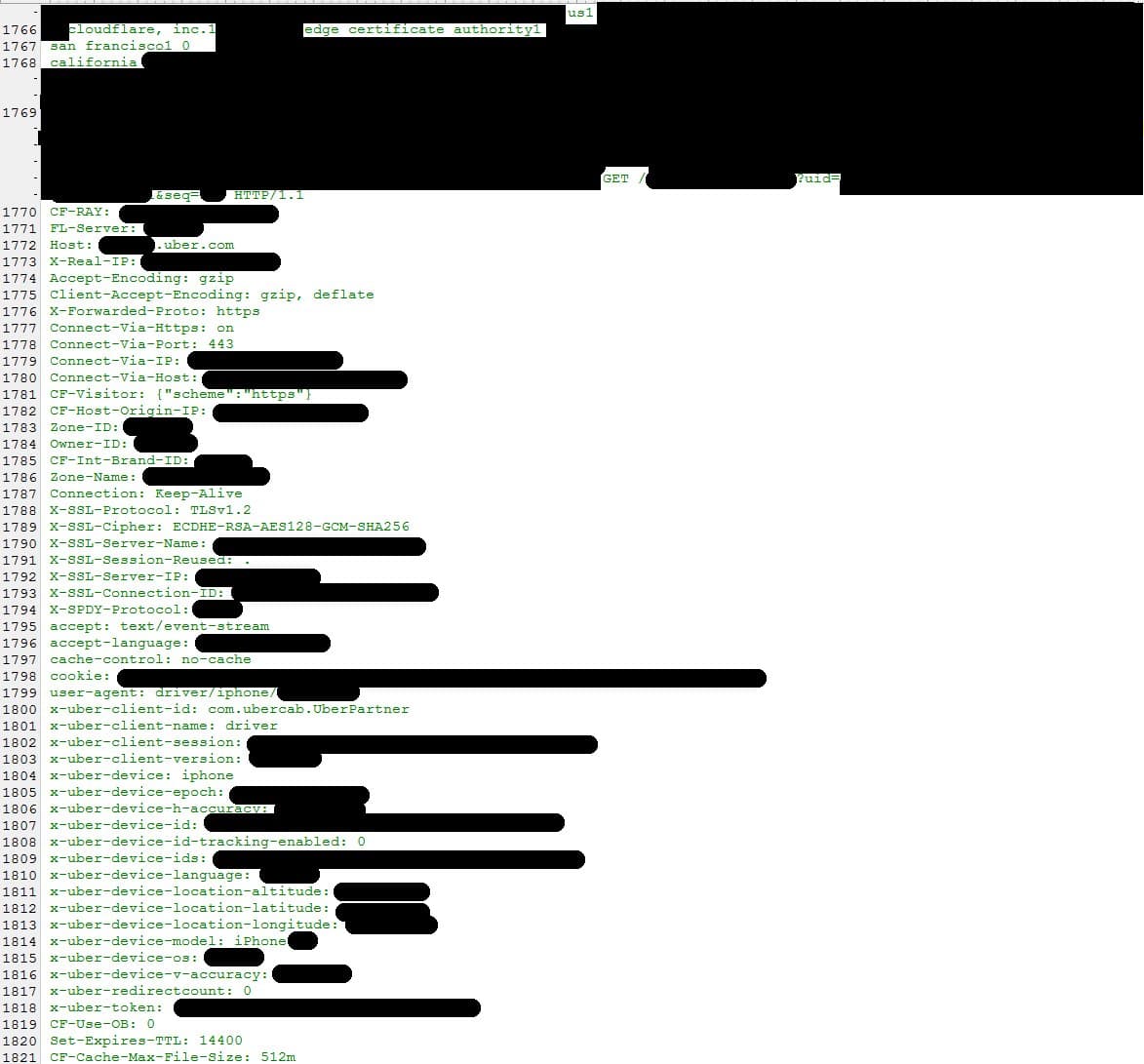
Cloudflare was leaking a wide range of sensitive information, including authentication cookies and login credentials, the flaw was dubbed Cloudbleed.
The notorious Google security researcher, Tavis Ormandy, recently made and astonishing discovery, Cloudflare was leaking a wide range of sensitive information, including authentication cookies and login credentials, the flaw was dubbed Cloudbleed.
“On February 17th 2017, I was working on a corpus distillation project, when I encountered some data that didn’t match what I had been expecting. It’s not unusual to find garbage, corrupt data, mislabeled data or just crazy non-conforming data…but the format of the data this time was confusing enough that I spent some time trying to debug what had gone wrong, wondering if it was a bug in my code. In fact, the data was bizarre enough that some colleagues around the Project Zero office even got intrigued.” Ormandy wrote in a security advisory. “We fetched a few live samples, and we observed encryption keys, cookies, passwords, chunks of POST data and even HTTPS requests for other major cloudflare-hosted sites from other users. Once we understood what we were seeing and the implications, we immediately stopped and contacted cloudflare security.”
Cloudflare have been leaking customer HTTPS sessions for months. Uber, 1Password, FitBit, OKCupid, etc. https://t.co/wjwE4M3Pbk
— Tavis Ormandy (@taviso) February 23, 2017
The Cloudbleed security issue in Cloudflare servers has a significant impact on numerous major organizations, including Uber, Fitbit, 1Password, and OKCupid. Cloudbleed also affects mobile apps, because, they are developed using the same backends as browsers for content delivery and HTTPS (SSL/TLS) termination.
“Last Friday, Tavis Ormandy from Google’s Project Zero contacted Cloudflare to report a security problem with our edge servers. He was seeing corrupted web pages being returned by some HTTP requests run through Cloudflare.” reads a blog post published by Cloudflare’s CTO, John Graham-Cumming
“It turned out that in some unusual circumstances, which I’ll detail below, our edge servers were running past the end of a buffer and returning memory that contained private information such as HTTP cookies, authentication tokens, HTTP POST bodies, and other sensitive data. And some of that data had been cached by search engines.”

Google has started removing cached copies of the leaked data, unfortunately, the same information is still stored in the servers of many other search engines that are accessible to everyone.
Cloudflare promptly responded to the incident, the company disabled the following features on its infrastructure because they leverage the broken HTML parser chain that is the root cause of the issue:
- Email obfuscation;
- Server-side Excludes;
- Automatic HTTPS Rewrites;
The root cause of Cloudbleed was that “reaching the end of a buffer was checked using the equality operator and a pointer was able to step past the end of the buffer.” “Had the check been done using >= instead of == jumping over the buffer end would have been caught,” explained Cumming.
The Cloudbleed issue dates back September 22, 2016, when the problem begun for the company. The greatest period of impact was between February 13 and February 18 with almost one in every 3,300,000 HTTP requests via Cloudflare potentially resulting in memory leakage, (roughly 0.00003% of requests).
“The bug was serious because the leaked memory could contain private information and because it had been cached by search engines. We have also not discovered any evidence of malicious exploits of the bug or other reports of its existence.” continues the post published by Cloudflare. “The greatest period of impact was from February 13 and February 18 with around 1 in every 3,300,000 HTTP requests through Cloudflare potentially resulting in memory leakage (that’s about 0.00003% of requests).”
It is very curious the fact that Cloudflare pointed Ormandy to the company bug bounty programme, offering the expert a reward of a t-shirt instead of financial compensation.
We cannot exclude that a threat actor discovering the Cloudbleed flaw may have been actively exploiting it, but at the time I was writing there is no evidence of such kind of attacks.
[adrotate banner=”9″]
(Security Affairs – Cloudbleed , hacking)


