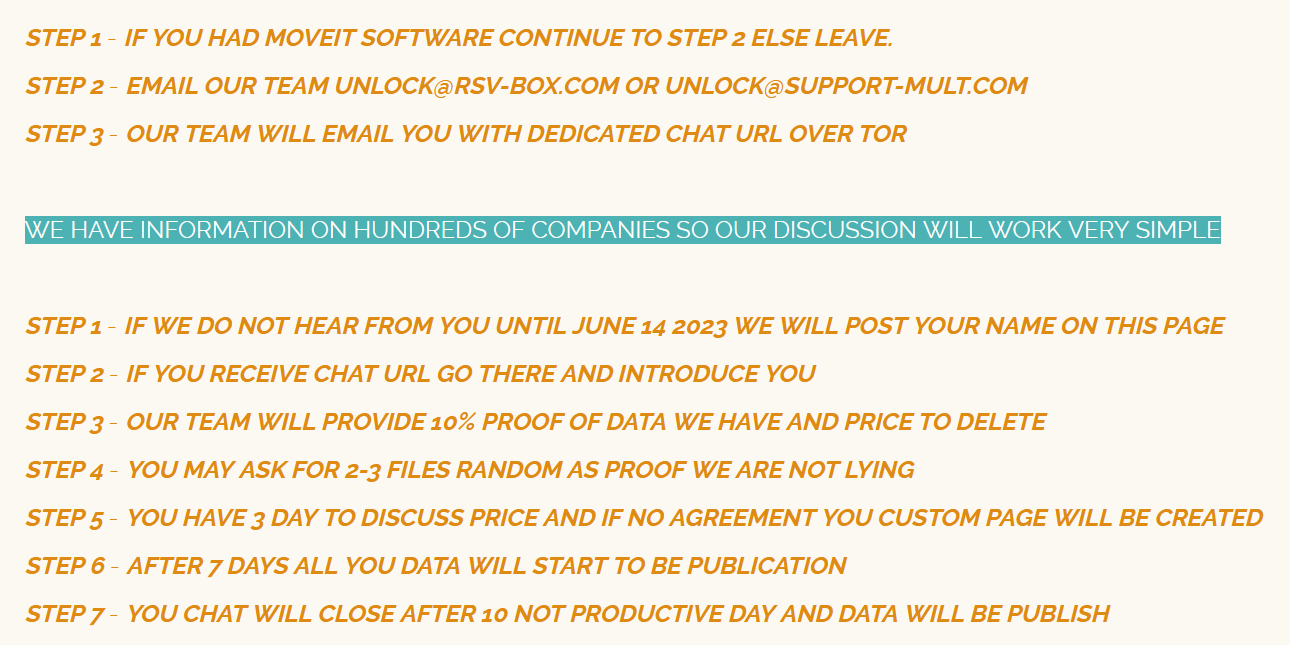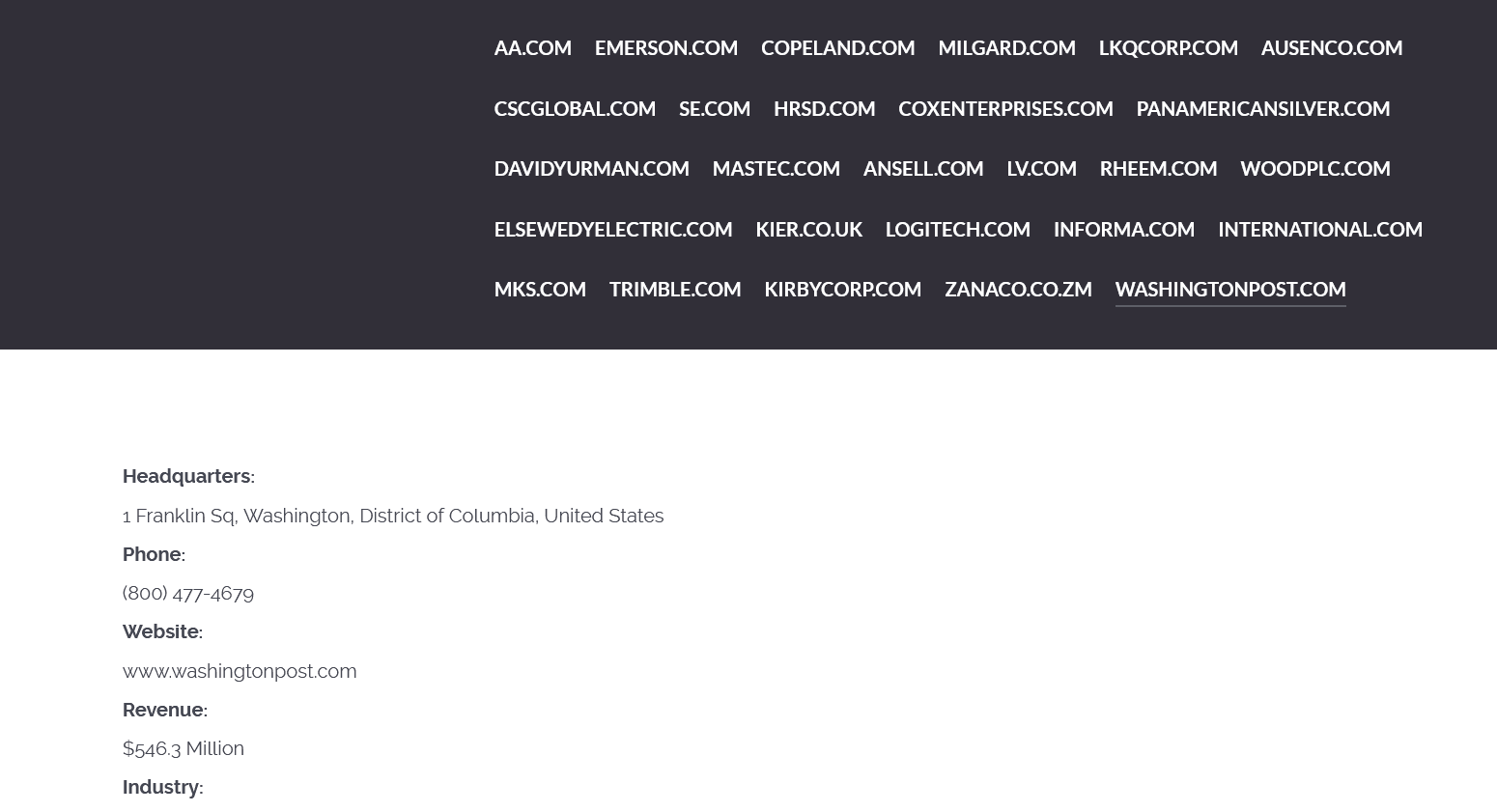
The Clop Ransomware group claims the breach of The Washington Post and added the American daily newspaper to its Tor data leak site.
The Clop Ransomware group announced the hack of the prestigious American daily newspaper The Washington Post. The cybercrime group created a page for the university on its Tor data leak site and announced it will leak the stolen data soon.
The group claimed the company was breached due to its neglect of security, despite its responsibility to protect customers.
“The company doesn’t care about its customers, it ignored their security!!!”

In mid-October, the Clop Ransomware group claimed the breach of The Washington Post and added the American daily newspaper to its Tor data leak site.
Clop (aka Cl0p) is a prolific Russian-speaking ransomware-as-a-service group specializing in big-game hunting and double-extortion.
The Clop ransomware group first appeared on the threat landscape around February 2019, emerging from the TA505 cybercrime group, a financially motivated gang active since at least 2014.
Like other Russia-based threat actors, Clop avoids targets in former Soviet countries and its malware can’t be activated on a computer that operates primarily in Russian.
Operators and affiliates identify high-value targets, steal sensitive data, encrypt networks, then publish stolen files on data-leak sites to pressure victims into paying. Clop exploits zero-days and vulnerable third-party software (e.g., MOVEit, GoAnywhere, Oracle EBS), leverages initial-access brokers and automation, and uses sophisticated evasion and lateral-movement techniques to maximize impact and monetization.
Clop’s victims include Shell, British Airways, Bombardier, University of Colorado, PwC, and the BBC.
The group conducted major campaigns including:
- GoAnywhere MFT (2023): Targeted a flaw (CVE-2023-0669) to compromise over 130 organizations.
- MOVEit Transfer (2023): One of the largest ransomware campaigns in history, impacting hundreds of companies worldwide, including US and European firms, through an SQL injection zero-day (CVE-2023-34362).
- Accellion FTA (2020–2021): Exploited a zero-day in the file-transfer appliance to steal data from ~100 organizations.
Follow me on Twitter: @securityaffairs and Facebook and Mastodon
(SecurityAffairs – hacking, The Washington Post)