
Security Affairs
Dark Caracal Deploys New Go Malware With Ethereum-Based C2 Fallback|Australian Police Charge Two Over TeamPCP Credential Theft|Meta to Pay Up to $18B Over Teen Social Media Use|CISA Warns Water Utilities: Find Your Exposed PLCs Before Attackers Do|OpenAI banned Russian ChatGPT accounts backing covert influence operation|CISA Red Team Fully Compromised Two Critical Infrastructure Orgs|FBI Seizes China-Linked Hacking Platforms QScan and QTRouter Used Against Critical Infrastructure|U.S. CISA adds Gitea flaw to its Known Exploited Vulnerabilities catalog|88 ID Verification Breaches Show the Cost of Collecting Identity Data|WhatsApp Adds Stronger Security as Passkeys Hit 1 Billion|Operation Jackal: 58 Arrests Expose the Money Laundering Machine Behind Global Scams|Norway ’s Digital Government Infrastructure Hit by a new DDoS Attack|Dark Caracal Deploys New Go Malware With Ethereum-Based C2 Fallback|Australian Police Charge Two Over TeamPCP Credential Theft|Meta to Pay Up to $18B Over Teen Social Media Use|CISA Warns Water Utilities: Find Your Exposed PLCs Before Attackers Do|OpenAI banned Russian ChatGPT accounts backing covert influence operation|CISA Red Team Fully Compromised Two Critical Infrastructure Orgs|FBI Seizes China-Linked Hacking Platforms QScan and QTRouter Used Against Critical Infrastructure|U.S. CISA adds Gitea flaw to its Known Exploited Vulnerabilities catalog|88 ID Verification Breaches Show the Cost of Collecting Identity Data|WhatsApp Adds Stronger Security as Passkeys Hit 1 Billion|Operation Jackal: 58 Arrests Expose the Money Laundering Machine Behind Global Scams|Norway ’s Digital Government Infrastructure Hit by a new DDoS Attack|
Advertisement

Ad Placeholder

Full Width × 90

Breaking News

Chrome evolves security indicators by marking with a red warning for HTTP content

Starting with Chrome 70, Google will mark with a red warning for HTTP content, Big G is continuing its effort to make the web more secure. Since January 2017, Chrome indicates connection security with an icon in the address bar labeling HTTP connections to sites as non-secure, while since May 2017 Google is marking newly registered sites that […]

Chrome evolves security indicators by marking with a red warning for HTTP content

Starting with Chrome 70, Google will mark with a red warning for HTTP content, Big G is continuing its effort to make the web more secure.

Since January 2017, Chrome indicates connection security with an icon in the address bar labeling HTTP connections to sites as non-secure, while since May 2017 Google is marking newly registered sites that serve login pages or password input fields over HTTP as not secure.

Back to the present, in May 2018 the overall encrypted traffic for several Google products is more than over 93%.

“Security is a top priority at Google. We are investing and working to make sure that our sites and services provide modern HTTPS by default. Our goal is to achieve 100% encryption across our products and services. The chart below shows how we’re doing across Google.” reads the Google Transparency report.

This is an important success for Google, consider that early 2014 only 50% of the traffic was encrypted.

According to the Google Transparency report, around 75% of the pages loaded via Chrome early May 2018 were served over secure HTTPS connections, while in 2014 the percentage was only around 40%.

Given now plan to mark unencrypted connections with a red “Not Secure” warning.

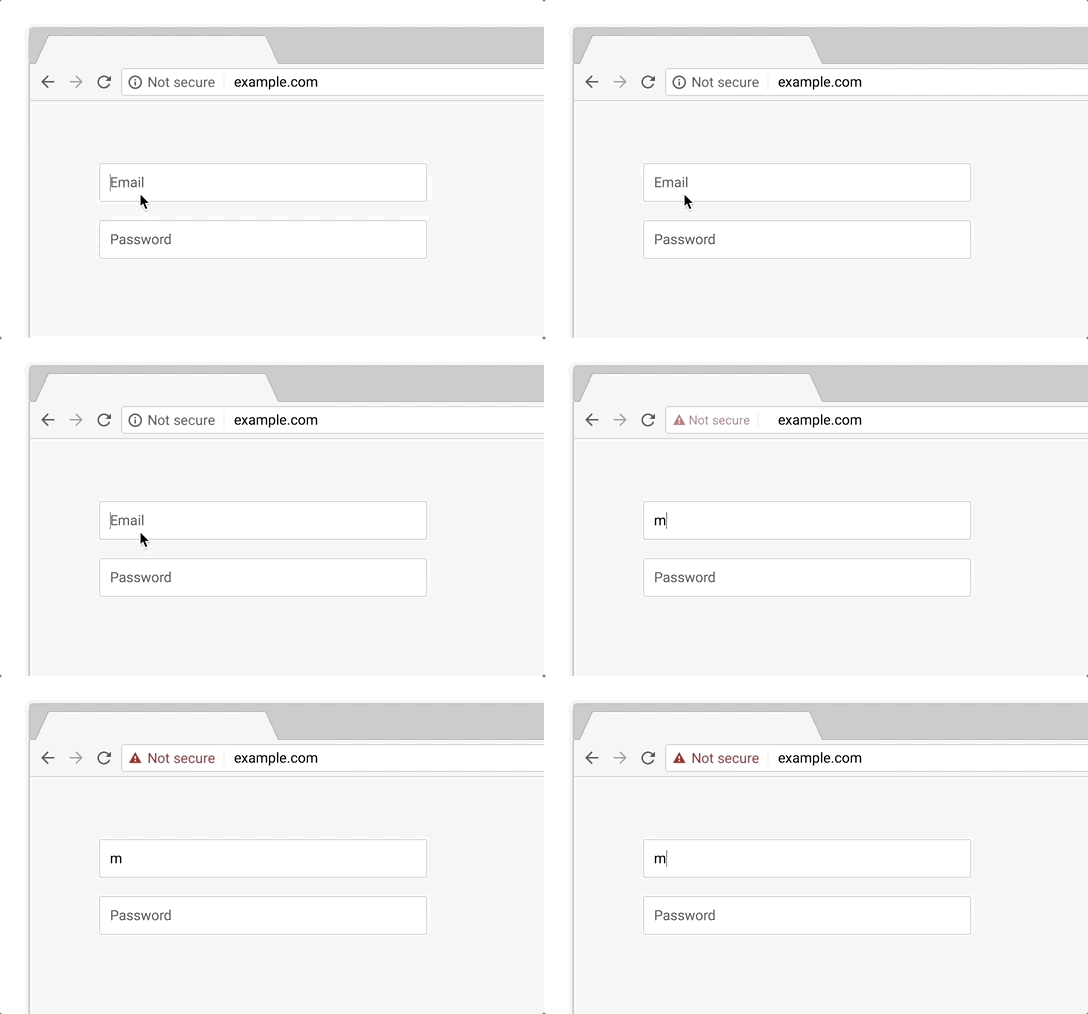
“Previously, HTTP usage was too high to mark all HTTP pages with a strong red warning, but in October 2018 (Chrome 70), we’ll start showing the red “not secure” warning when users enter data on HTTP pages,” reads a blog post published by Google.

Chrome 70 treatment for HTTP pages with user input

“We hope these changes continue to pave the way for a web that’s easy to use safely, by default. HTTPS is cheaper and easier than ever before, and unlocks powerful capabilities — so don’t wait to migrate to HTTPS! Check out our set-up guides to get started.” explained Emily Schechter, Product Manager, Chrome Security”

[adrotate banner=”9″] [adrotate banner=”12″]

Pierluigi Paganini

(Security Affairs – Chrome 70, HTTPs)

[adrotate banner=”5″]

[adrotate banner=”13″]


