
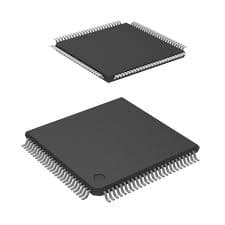
During last days an insistent news circulated on the internet, a microchip used by the US military and manufactured in China contains a secret “backdoor” that make possible a remote control of the devices.
The disclosure is attributed to Cambridge University’s Computing Laboratory, it’s clear the media impact of similar news in security environments, an earthquake that turned around in a big concern given the overwhelming problem of qualification of hardware with particular reference to the military.
The researcher of Cambridge University, Sergei Skorobogatov wrote in a draft document that the chip is used in military and industrial applications. Skorobogatov declared that the backdoor has been discovered during testing of a new technique to extract the encryption key from chip, a techniques developed by the spin-off Quo Vadis Labs.
The existence of a backdoor could expose to serious risks of theft the intellectual property the victims and could give a complete control of the devices to the attackers. The researcher is sure of the backdoor existence as part of the chip and it isn’t related to the firmware.
“The discovery of a backdoor in a military grade chip raises some serious questions about hardware assurance in the semiconductor industry,”
wrote Skorobogatov.
A different view has been provided by Robert Graham, U.S. security consultancy at Errata Security, that has declared that the discovered bug hasn’t malicious purpose, it is an entry point installed by the manufacturer for debugging operations.
“It’s remotely possible that the Chinese manufacturer added the functionality, but highly improbable. It’s prohibitively difficult to change a chip design to add functionality of this complexity.”
Graham added that anyway a backdoor could pose a security threat
“It not only allows the original manufacturer to steal intellectual-property, but any other secrets you tried to protect with the original [encryption] key.”
Graham argues that the presence of backdoors is widespread, about 20% of home routers and around 50% of industrial control computers have a backdoor. Not all backdoors of course have a malicious purpose, in many cases they are used to debug software and firmware contained in the product.
Graham added that chip designers project a chip from building-blocks, including a module with debug functionality such as JTAG. Many commercial products include the famous module for chip debugging.
The expert says that companies have to disable the debug feature in the final version but usually they don’t do it due great expenses to the design of the chip, they leave JTAG interface enabled just not connect the pins to it or if they connect the pins, they don’t route to the pins on the circuit board.

The chip in question (Microsemi/Actel ProASIC3) is a typical FPGA – a chip with a blank array of gates that can be programmed to emulate almost any other kind of chip. General purpose FPGA are chipest of real silicon chips so they are largely used.
It is clear the importance of the attention to devote to hardware devices in a more advanced technology scenario. Microcircuits and firmware are present in every device around us, from the control of our cars to satellite communications systems. Each product requires a careful analysis and the qualification of manufacturing processes that accompany it.
The ability to manage every aspect of what we have described must be part of a cyber strategy that each country must deploy and that is the only way to guarantee satisfactory security levels.
In the meantime, let’s wait for the final response of the Microsemi/Actel firm.
| [adrotate banner=”9″] | [adrotate banner=”12″] |
(Security Affairs – hardware qualification, chip)
[adrotate banner=”5″]
[adrotate banner=”13″]


