
Europe Confirms Record €4.1B Penalty Against Google for Android Practices|U.S. CISA adds a Microsoft SharePoint Server flaw to its Known Exploited Vulnerabilities catalog|430,000 FortiGate Devices Exposed in FortiBleed Ransomware Link|Adobe fixed multiple maximum-severity flaws in ColdFusion and Campaign Classic|Alleged Scattered Spider Hacker Extradited to U.S. to Face Cybercrime Charges|Oracle E-Business Suite Flaw Under Active Attack, 950 Systems Exposed|Azure CLI Targeted in LSHIY Password Spray Campaign Across 64 Orgs|CISA Warns BlueHammer Flaw Is Now Exploited in Ransomware Attacks|RustDuck: The Botnet That’s Still Small but Engineering Like It Plans to Grow|GuardFall Flaw Hits 10 of 11 Popular Open-Source AI Agents|XSS.is, The Forum That Ran the Ransomware Supply Chain Is Down. The Market Isn’t|U.S. CISA adds SimpleHelp flaw to its Known Exploited Vulnerabilities catalog|Europe Confirms Record €4.1B Penalty Against Google for Android Practices|U.S. CISA adds a Microsoft SharePoint Server flaw to its Known Exploited Vulnerabilities catalog|430,000 FortiGate Devices Exposed in FortiBleed Ransomware Link|Adobe fixed multiple maximum-severity flaws in ColdFusion and Campaign Classic|Alleged Scattered Spider Hacker Extradited to U.S. to Face Cybercrime Charges|Oracle E-Business Suite Flaw Under Active Attack, 950 Systems Exposed|Azure CLI Targeted in LSHIY Password Spray Campaign Across 64 Orgs|CISA Warns BlueHammer Flaw Is Now Exploited in Ransomware Attacks|RustDuck: The Botnet That’s Still Small but Engineering Like It Plans to Grow|GuardFall Flaw Hits 10 of 11 Popular Open-Source AI Agents|XSS.is, The Forum That Ran the Ransomware Supply Chain Is Down. The Market Isn’t|U.S. CISA adds SimpleHelp flaw to its Known Exploited Vulnerabilities catalog|
Advertisement

Ad Placeholder

Full Width × 90

Breaking News

BlueKeep scans observed from exclusively Tor exit nodes

GreyNoise experts detected scans for systems vulnerable to the BlueKeep (CVE-2019-0708) vulnerability from exclusively Tor exit nodes. Microsoft Patch Tuesday updates for May 2019 address nearly 80 vulnerabilities, including an RDS vulnerability dubbed BlueKeep that can be exploited to carry out WannaCry-like attack. The issue is a remote code execution flaw in Remote Desktop Services (RDS) that it can […]

BlueKeep

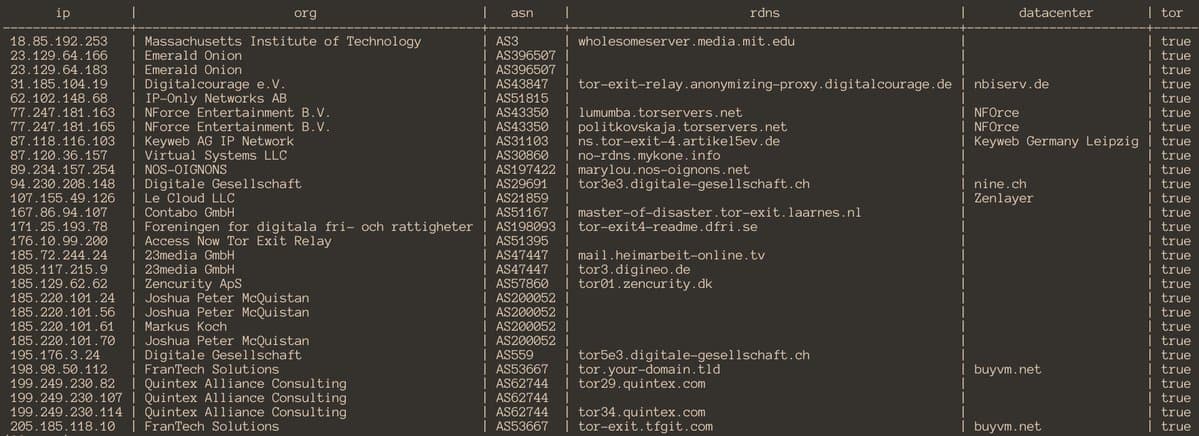
GreyNoise experts detected scans for systems vulnerable to the BlueKeep (CVE-2019-0708) vulnerability from exclusively Tor exit nodes.

Microsoft Patch Tuesday updates for May 2019 address nearly 80 vulnerabilities, including an RDS vulnerability dubbed BlueKeep that can be exploited to carry out WannaCry-like attack.

The issue is a remote code execution flaw in Remote Desktop Services (RDS) that it can be exploited by an unauthenticated attacker by connecting to the targeted system via the RDP and sending specially crafted requests.

As explained by Microsoft, this vulnerability could be exploited by malware with wormable capabilities, it could be exploited without user interaction, making it possible for malware to spread in an uncontrolled way into the target networks.

Several security experts have already developed their own exploit code for this issue without publicly disclosing it for obvious reasons.

Experts at the SANS Institute observed two partial exploits that are publicly available. Chaouki Bekrar, the founder of zero-day broker firm Zerodium, explained that the flaw can be exploited remotely by an unauthenticated user to gain access to a device with SYSTEM privileges. Researchers at McAfee developed a PoC exploit that could be exploited to get remote code execution.

Other experts also announced to have successfully developed exploits for BlueKeep, including KasperskyCheck Point, and MalwareTech.

Experts at NCC Group released detection rules for the detection of exploitation attempts for this issue. A similar

News of the day is that an attacker started scanning for Windows systems vulnerable to BlueKeep (CVE-2019-0708) vulnerability, fortunately without attempting to exploit it.

The scans were first detected on May 25, 2019, by experts at GreyNoise, a single threat actor launched them from the Tor network to hide their identities.

Experts believe that it’s a matter of time until security firms will detect exploit attempts in the wild.


If you appreciate my effort in spreading cybersecurity awareness, please vote for Security Affairs in the section “Your Vote for the Best EU Security Tweeter”

Thank you

[adrotate banner=”9″] [adrotate banner=”12″]

Pierluigi Paganini

(SecurityAffairs – hacking, Windows BlueKeep)

[adrotate banner=”5″]

[adrotate banner=”13″]


