
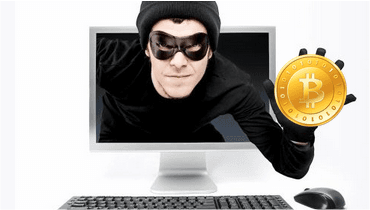
Hundreds of Facebook users from Portugal, Belgium, India, Romania, Serbia and other countries got infected with a new Bitcoin mining Trojan.
Social media represents a privileged target for cybercrime, the last threat that is menacing Facebook users is a new malicious campaign which spread a Trojan with mining capabilities.
Security Expert at Bitdefender firm discovered that hundreds of Facebook users got infected with a trojan having Bitcoin mining capabilities, the infections have been observed in different countries including Portugal, Belgium, India, Romania and Serbia.
“The virus spreads through private Facebook messages, received from one of the victim’s trusted Facebook friends,” “It reads ‘hahaha”’ and contains an archive called 1IMAG00953.zip with what seems to be a legitimate .jpg image file.”explains Bitdefender’s Alexandra Gheorghe in a blog post.

In reality the attackers exploit the a Java file, masquerade as a legitimate .jpg image, to download DLL files from a pre-defined Dropbox account. The files contact the Command and Control server to receive back shellcode that is injected into Windows Explorer and executed. The shellcode is base64-encoded payload, the message reads:
“Hello people.. 🙂 <!– Designed by the SkyNet Team –> but am not the f*****g zeus bot/skynet bot or whatever piece of s**t.. no fraud here.. only a bit of mining. Stop breaking my b***z..
The shell code triggers the download of a secondary DLL from a hardcoded location that embeds a Bitcoin miner that will start the mining process immediately.
But the trojan could be exploited for many other illegal activities, Bitdefender researchers discovered that the delivered payload can be changed every couple of hours, adapting the behavior of the trojan to the cyber criminals needs.
“Bitcoin mining is a small fraction of the entire affair. Cyber-criminals can modify the shellcode once every couple of hours. They can push other types of malware without the victim’s knowledge or intervention, depending on what they have in mind with their PCs.”
The unique protection for users is to avoid to open any suspicious massages, even if it came from a trusted source, Be aware the malicious messages could be sent via email or via SMS.
Keep your antivirus software upgraded.
(Security Affairs – Bitcoin mining, Trojan)


