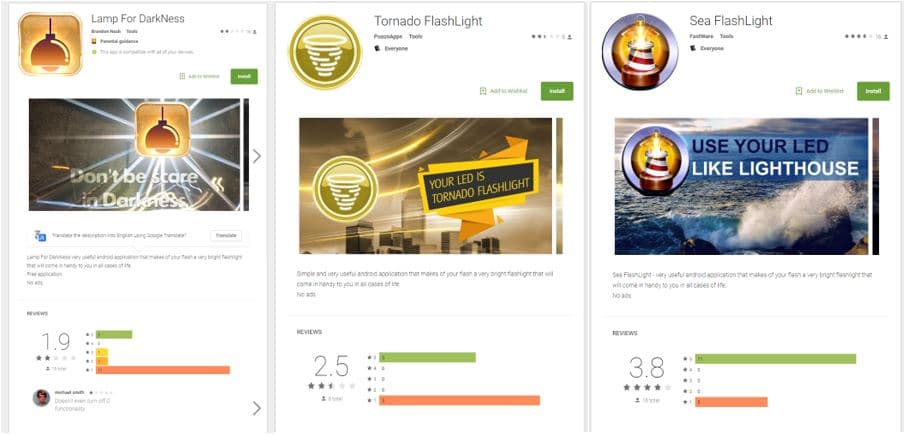
Experts from several security firms has spotted two new malware campaigns targeting Google Play Store users, once of them spreads the BankBot Trojan.
Once again crooks succeeded in publishing a malware in the official Google Play Store deceiving the anti-malware protections implemented by the tech giant.
A team composed of security experts from several security firms has spotted two new malware campaigns targeting Google Play Store users, once of them is spreading a new version of the infamous BankBot banking Trojan.
The android malware is also able to intercept text messages and delete them from the victim’s device, in this way it could bypass 2FA implemented by banks.
Google removed at least four previous versions of this banking trojan from the Play Store from the beginning of the year, but crooks always succeeded in proposing a new variant infecting victims of major banks worldwide.
Experts found a second campaign that spreads the same BankBot trojan alongside with the Mazar and Red Alert malware.
“Another set of malicious apps has made it into the official Android app store. Detected by ESET security systems as Android/TrojanDropper.Agent.BKY, these apps form a new family of multi-stage Android malware, legitimate-looking and with delayed onset of malicious activity.” reads the analysis published by ESET.
“We have discovered eight apps of this malware family on Google Play and notified Google’s security team about the issue. Google has removed all eight apps from its store; users with Google Play Protect enabled are protected via this mechanism.”
Researchers from security firms ESET, AVAST, and SfyLabs shared their knowledge on the threat and wrote a joint report.

The experts first spotted the malicious apps on October 13, the apps use special techniques to circumvent Google automated detection checks such as delaying the malicious activities of 2 hours after the user gave device admin rights to the application.
When the dropper finds one or more apps on the infected device, it downloads and installs the BankBot APK from the C&C server on the device, and trick the victim into giving it administrator rights by pretending to be a Play Store or system update.
The admin privileges allow the BankBot app to display overlay on the top of legitimate apps.
The Avast Threat Labs published a video PoC to show how the app creates an overlay within milliseconds and tricks the user into giving out their bank details to criminals.
Researchers explained that the latest version of the BankBot Trojan does not utilize the Accessibility Service feature that was recently blocked by Google feature for all applications, except those designed to provide services for the blind.
“Unlike this newer version of BankBot, droppers from previous campaigns were far more sophisticated. They applied techniques such as performing clicks in the background via an Accessibility Service to enable the installation from unknown sources. Google blocked this service for all applications this fall, except those designed to provide services for the blind. Therefore, the new BankBot version cannot utilize this mechanism any more.” states AVAST.
Further technical details are included in the reports published by the security firms involved in the investigation on both campaigns.
| [adrotate banner=”9″] | [adrotate banner=”12″] |
(Security Affairs – mobile, BankBot Trojan)
[adrotate banner=”5″]
[adrotate banner=”13″]