
430,000 FortiGate Devices Exposed in FortiBleed Ransomware Link|Adobe fixed multiple maximum-severity flaws in ColdFusion and Campaign Classic|Alleged Scattered Spider Hacker Extradited to U.S. to Face Cybercrime Charges|Oracle E-Business Suite Flaw Under Active Attack, 950 Systems Exposed|Azure CLI Targeted in LSHIY Password Spray Campaign Across 64 Orgs|CISA Warns BlueHammer Flaw Is Now Exploited in Ransomware Attacks|RustDuck: The Botnet That’s Still Small but Engineering Like It Plans to Grow|GuardFall Flaw Hits 10 of 11 Popular Open-Source AI Agents|XSS.is, The Forum That Ran the Ransomware Supply Chain Is Down. The Market Isn’t|U.S. CISA adds SimpleHelp flaw to its Known Exploited Vulnerabilities catalog|Hackers Steal Data of 4.38 Million Aflac Japan Customers|Apple Fixes WebKit Flaws in iOS and macOS, With Help From AI Tools|430,000 FortiGate Devices Exposed in FortiBleed Ransomware Link|Adobe fixed multiple maximum-severity flaws in ColdFusion and Campaign Classic|Alleged Scattered Spider Hacker Extradited to U.S. to Face Cybercrime Charges|Oracle E-Business Suite Flaw Under Active Attack, 950 Systems Exposed|Azure CLI Targeted in LSHIY Password Spray Campaign Across 64 Orgs|CISA Warns BlueHammer Flaw Is Now Exploited in Ransomware Attacks|RustDuck: The Botnet That’s Still Small but Engineering Like It Plans to Grow|GuardFall Flaw Hits 10 of 11 Popular Open-Source AI Agents|XSS.is, The Forum That Ran the Ransomware Supply Chain Is Down. The Market Isn’t|U.S. CISA adds SimpleHelp flaw to its Known Exploited Vulnerabilities catalog|Hackers Steal Data of 4.38 Million Aflac Japan Customers|Apple Fixes WebKit Flaws in iOS and macOS, With Help From AI Tools|
Advertisement

Ad Placeholder

Full Width × 90

Breaking News

Austria investigates DSIRF firm for allegedly developing Subzero spyware 

Austria is investigating a report that an Austrian firm DSIRF developed spyware targeting law firms, banks and consultancies. At the end of July, Microsoft Threat Intelligence Center (MSTIC) and the Microsoft Security Response Center (MSRC) researchers linked a threat group known as Knotweed to an Austrian surveillance firm named DSIRF, known for using multiple Windows […]

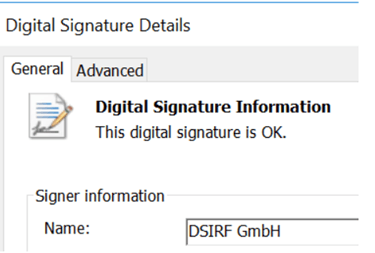
Subzero malware Fig1-Valid-digital-signature-from-DSIRF.

Austria is investigating a report that an Austrian firm DSIRF developed spyware targeting law firms, banks and consultancies.

At the end of July, Microsoft Threat Intelligence Center (MSTIC) and the Microsoft Security Response Center (MSRC) researchers linked a threat group known as Knotweed to an Austrian surveillance firm named DSIRF, known for using multiple Windows and Adobe zero-day exploits. The group targets entities in Europe and Central America with a surveillance tool dubbed Subzero.

Microsoft states that multiple news reports have linked the company to the Subzero malware toolset used to hack a broad range of devices, phones, computers, and network and internet-connected devices.

The researchers found evidence that links DSIRF to the Knotweed’s operation, including the C2 infrastructure used by Subzero, and code signing certificate issued to DSIRF that is used to sign an exploit.

Subzero malware Fig1-Valid-digital-signature-from-DSIRF.

Microsoft reported Subzero attacks against Microsoft customers in Austria, the United Kingdom, and Panama. The targeted entities are law firms, banks, and strategic consultancies.

Last week, Austria announced it is investigating the report that links DSIRF to spyware targeting entities in at least three countries.

Austria’s interior ministry said it is not aware of any incidents and has no business relationships with it

“Of course, DSN (the National Security and Intelligence Directorate) checks the allegations. So far, there is no proof of the use of spy software from the company mentioned,” reads a statement published by Austria’s interior ministry.

Austria’s Kurier newspaper confirmed that the DSIRF developed the Subzero surveillance software, but added that it had not been misused and was developed exclusively for use by authorities in EU states- The newspaper also added that the spyware was not commercially available.

Follow me on Twitter: @securityaffairs and Facebook

[adrotate banner=”9″][adrotate banner=”12″]

Pierluigi Paganini

(SecurityAffairs – hacking, DSIRF)

[adrotate banner=”5″]

[adrotate banner=”13″]


