Hackers reveal security flaws in smart solar systems, exposing risks to national power grids as global reliance on solar energy grows.
DW investigated the risks of cyber attacks exploiting vulnerabilities in smart solar systems while the demand for solar energy grows. The German news outlet DW interviewed hackers who’ve exposed security flaws in rooftop installations and solar power plants worldwide.
One of these experts, the white hat hacker Aditya K Sood, demonstrated how weak or default passwords expose solar plants to cyber threats, allowing remote control over power systems, risking grid security.
“There it goes,” says Aditya K Sood as the remote dashboard for a solar power plant in India appears on his screen. The US-based hacker explained that control consoles for smart solar systems are often poorly protected or configured with weak or default passwords.
“For this story, DW spoke to three different cybersecurity experts who all said they’d been able to access millions of units at once. They claim that had they manipulated the power those plants feed into the European power grid, they could have caused blackouts — a real threat amid the hybrid warfare against the West launched by Russia and others.” reads the article published by DW.
Andreas Ulbig, a researcher at RWTH technical university in Aachen (Germany), emphasizes that digitizing Europe’s power grid is crucial for transitioning from large thermal plants to millions of renewable energy units.
Ulbig explained that threat actors could compromise smart grids, potentially causing blackouts, but coordinating enough attacks to trigger safety protocols would be difficult.
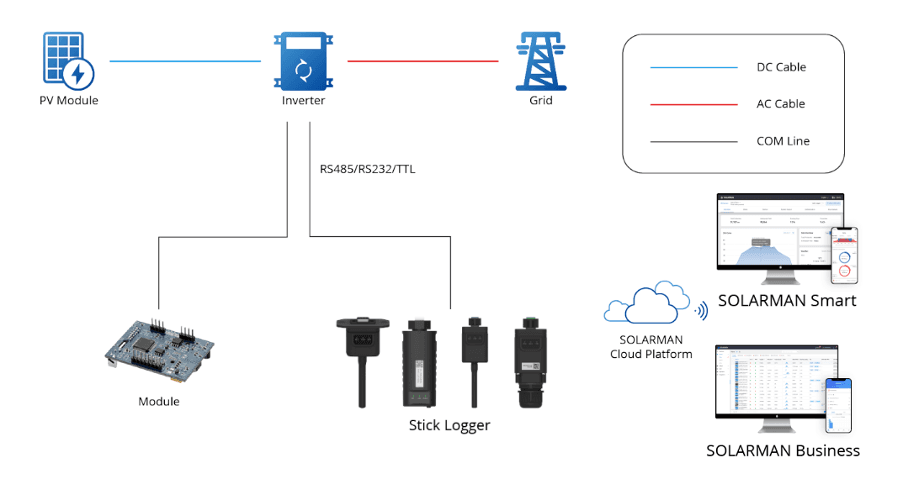
The experts pointed out that the majority of smart solar systems support cloud-based remote monitoring provided by multiple vendors. One such provider is the Chinese company Solarman PV, which monitors 195 GW of solar capacity across 190 countries, about 10% of the global total.
In August 2024, Bitdefender found a major bug in Solarman PV’s software, exposing all client connections. They demonstrated how to get access to systems in the United States.
“Bitdefender researchers have identified a series of vulnerabilities in PV plant management platforms operated by Solarman and Deye. This platform is responsible for coordinating production operations of millions of solar installations worldwide generating a whopping output of approximately 195 GW of solar power (20% of the global solar production).” reads the report published by Bitdefender. “If exploited, these vulnerabilities could allow an attacker to control inverter settings that could take parts of the grid down, potentially causing blackouts.”

DW concludes that threat actors continue to target EU critical infrastructure, in September 2024, the pro-Russian hacktivist group Just Evil and the nation-state actor Beregini launched a coordinated cyberattack on Lithuanian energy infrastructure.
Follow me on Twitter: @securityaffairs and Facebook and Mastodon
(SecurityAffairs – hacking, smart solar systems)