
Russia-link cyberespionage APT28 leverages COVID-19 as phishing lures to deliver the Go version of their Zebrocy (or Zekapab) malware.
Russia-linked APT28 is leveraging COVID-19 as phishing lures in a new wave of attacks aimed at distributing the Go version of their Zebrocy (or Zekapab) malware.
The APT28 group (aka Fancy Bear, Pawn Storm, Sofacy Group, Sednit, and STRONTIUM) has been active since at least 2007 and it has targeted governments, militaries, and security organizations worldwide. The group was involved also in the string of attacks that targeted 2016 Presidential election.
Researchers from cybersecurity firm Intezer linked the attacks to a group operating under the APT28.
The Zebrocy backdoor was mainly used in attacks targeting governments and commercial organizations engaged in foreign affairs. The threat actors used lures consisted of documents about Sinopharm International Corporation, a pharmaceutical company involved in the development of a COVID-19 vaccine and that is currently going through phase three clinical trials. The phishing messages impersonated evacuation letter from Directorate General of Civil Aviation and contained decoy Microsoft Office documents with macros as well as executable file attachments.
“In November, we uncovered COVID-19 phishing lures that were used to deliver the Go version of Zebrocy. Zebrocy is mainly used against governments and commercial organizations engaged in foreign affairs. The lures consisted of documents about Sinopharm International Corporation” reads the analysis published by Intezer.
The lure was delivered as part of a Virtual Hard Drive (VHD) file that could be accessed only by Windows 10 users. The malware samples analyzed by the researchers were heavily obfuscated, but the analysis of the code allowed the experts to attribute them to the APT28.
Go versions of the backdoor were used since 2018, they initially start collecting info on the compromised system, and then sends it to the command and control server.
The data collected by the malware includes a list of running processes, information gathered via the ”systeminfo” command, local disk information, and a screenshot of the desktop.
The malware connects to the C2 through HTTP POST requests.
The malware also attempts to download and execute a payload from the C2 it.
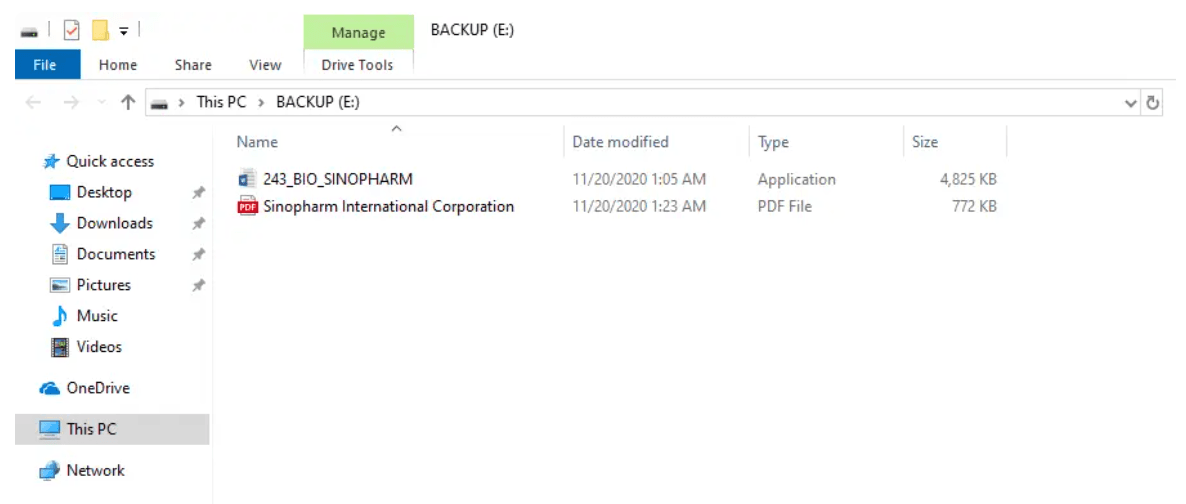
Upon mounting the VHD file, it appears as an external drive with two files, a PDF document that purports to contain presentation slides about Sinopharm International Corporation and an executable that masquerades as a Word document. When opened, the executable runs the Zebrocy malware.

In an attack carried out in November and aimed at Kazakhstan, the threat actors used phishing lures that impersonating an evacuation letter from India’s Directorate General of Civil Aviation.
“Zebrocy is a malware toolset used by the Sofacy threat group. While the group keeps changing obfuscation and delivery techniques, code reuse allowed Intezer to detect and correctly classify this malware.” concludes the report. “With these recent phishing lures, it’s clear that COVID-19 themed attacks are still a threat and we might see more as vaccines become available to the general public.”
| [adrotate banner=”9″] | [adrotate banner=”12″] |
(SecurityAffairs – hacking, Zebrocy)
[adrotate banner=”5″]
[adrotate banner=”13″]


