
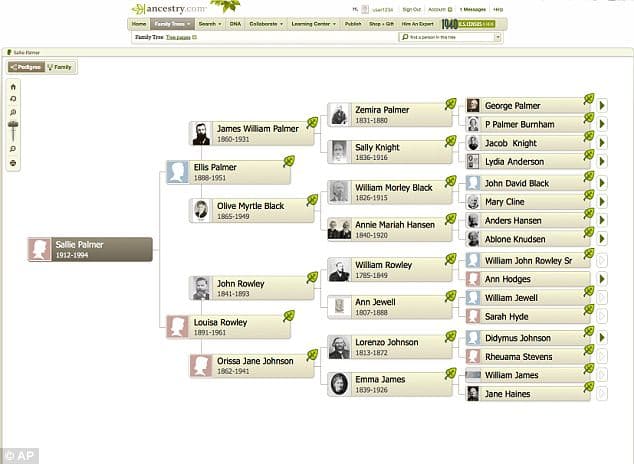
The popular expert Troy Hunt notified the Ancestry.com security team of an unsecured file on a RootsWeb server containing “email addresses/username and password combinations as well as usernames from a RootsWeb.com server”.
When you think of personal security questions, you might think of your mother’s surname or other family information that normally isn’t shared — unless you are building your family tree with an online genealogy search. When Ancestry.com notifies its users of a potential security breach it sounds worse than most.
Ancestry.com is a company with millions of customers that use their online tools to research their family tree. The company also hosts servers for RootsWeb, a free, community-driven collection of genealogy tools and discussion forums. On December 20th, 2017, Troy Hunt, of HaveIBeenPwned.com, notified the Ancestry.com security team of an unsecured file on a RootsWeb server containing “email addresses/username and password combinations as well as usernames from a RootsWeb.com server”, and a quick and detailed investigation ensued.

According to Ancestry.com’s blog post detailing the incident, the security team reviewed the file identified by Hunt, and determined that it does contain login details for 300,000 accounts although they describe, “the majority of the information was old.” They continued their investigation and determined that of the 300,000 accounts, 55,000 had been reused by users on both the RootsWeb and Ancestry websites. Most of the 55,000 were “from free trial, or currently unused accounts,” but 7,000 login credentials were in use by active Ancestry.com users. Ancestry.com supports millions of users so this breach represents less than 1% of their users, however, they still took the potential impacts seriously and acted accordingly.
The internal investigation points to the RootsWeb surname list information service which Ancestry.com retired earlier this year. “We believe the intrusion was limited to the RootsWeb surname list, where someone was able to create the file of older RootsWeb usernames and passwords as a direct result of how part of this open community was set up, an issue we are working to rectify”, according to the blog post by Ancestry.com CISO, Tony Blackman.
He continued with, “We have no reason to believe that any Ancestry systems were compromised. Further, we have not seen any activity indicating the compromise of any individual Ancestry accounts.” According to Ancestry, the RootsWeb servers do not host any credit card or social insurance numbers so the potential impact of this breach appears to be minimized.
The RootsWeb website is currently offline while the Ancestry teams complete their investigation, make the appropriate configuration changes and “ensure all data is saved and preserved to the best of [their] ability.”
In addition, the Ancestry has locked the 55,000 accounts found in the exposed file, requiring users to change their passwords the next time they attempt to log on. They sent emails to all 55,000 email addresses advising them of the incident and recommended actions, and commit to “working with regulators and law enforcement where appropriate.”
To summarize, the Ancestry.com security team responded quickly when notified of a potential breach, determined the potential scope and impact, took swift action to minimize damages, notified impacted users, clearly and publicly described the event. Troy Hunt’s tweet describes it best, “Another data breach from years ago, this time from @Ancestry’s services. Really impressed with the way they handled this: I got in touch with them bang on 72 hours ago and they’ve handled it in an exemplary fashion.”
Another data breach from years ago, this time from one of @Ancestry's services. Really impressed with the way they handled this: I got in touch with them bang on 72 hours ago and they've handled it in an exemplary fashion https://t.co/9qo7LIUQy4
— Troy Hunt (@troyhunt) December 23, 2017
 About the author: Steve Biswanger has over 20 years experience in Information Security consulting, and is a frequent speaker on risk, ICS and IoT topics. He is currently Director of Information Security for Encana, a North American oil & gas company and sits on the Board of Directors for the (ISC)2 Alberta Chapter.
| [adrotate banner=”9″] | [adrotate banner=”12″] |
(Security Affairs – Ancestry.com, data breach)
[adrotate banner=”5″]
[adrotate banner=”13″]


