Security Affairs
U.S. CISA adds Red Hat, Linux Kernel, Ajax.NET Professional, Microsoft SQL Server, and Citrix NetScaler flaws to its Known Exploited Vulnerabilities catalog|Cyberattack on UK Airport Operator MAG Exposes Data of 8.7 Million Customers Across Three Airports|Dark Caracal Deploys New Go Malware With Ethereum-Based C2 Fallback|Australian Police Charge Two Over TeamPCP Credential Theft|Meta to Pay Up to $18B Over Teen Social Media Use|CISA Warns Water Utilities: Find Your Exposed PLCs Before Attackers Do|OpenAI banned Russian ChatGPT accounts backing covert influence operation|CISA Red Team Fully Compromised Two Critical Infrastructure Orgs|FBI Seizes China-Linked Hacking Platforms QScan and QTRouter Used Against Critical Infrastructure|U.S. CISA adds Gitea flaw to its Known Exploited Vulnerabilities catalog|88 ID Verification Breaches Show the Cost of Collecting Identity Data|WhatsApp Adds Stronger Security as Passkeys Hit 1 Billion|U.S. CISA adds Red Hat, Linux Kernel, Ajax.NET Professional, Microsoft SQL Server, and Citrix NetScaler flaws to its Known Exploited Vulnerabilities catalog|Cyberattack on UK Airport Operator MAG Exposes Data of 8.7 Million Customers Across Three Airports|Dark Caracal Deploys New Go Malware With Ethereum-Based C2 Fallback|Australian Police Charge Two Over TeamPCP Credential Theft|Meta to Pay Up to $18B Over Teen Social Media Use|CISA Warns Water Utilities: Find Your Exposed PLCs Before Attackers Do|OpenAI banned Russian ChatGPT accounts backing covert influence operation|CISA Red Team Fully Compromised Two Critical Infrastructure Orgs|FBI Seizes China-Linked Hacking Platforms QScan and QTRouter Used Against Critical Infrastructure|U.S. CISA adds Gitea flaw to its Known Exploited Vulnerabilities catalog|88 ID Verification Breaches Show the Cost of Collecting Identity Data|WhatsApp Adds Stronger Security as Passkeys Hit 1 Billion|
Advertisement

Ad Placeholder

Full Width × 90

Breaking News

Phishers continue to abuse Adobe and Google Open Redirects

Adobe and Google Open Redirects Abused by Phishing Campaigns Experts reported that phishing campaigns are leveraging Google and Adobe open redirects to bypass spam filters and redirect users to malicious sites. Phishers are abusing Google and Adobe open redirects to bypass spam filters and redirect users to malicious sites. Crooks abuse Google and Adobe services […]

google open redirects

Adobe and Google Open Redirects Abused by Phishing Campaigns

Experts reported that phishing campaigns are leveraging Google and Adobe open redirects to bypass spam filters and redirect users to malicious sites.

Phishers are abusing Google and Adobe open redirects to bypass spam filters and redirect users to malicious sites.

Crooks abuse Google and Adobe services to create URLs that point to malicious websites that anyway are able to bypass security filters because they appear as legitimate URLs from trusted IT giants.

“Open redirectors take you from a Google URL to another website chosen by whoever constructed the link. Some members of the security community argue that the redirectors aid phishing, because users may be inclined to trust the mouse hover tooltip on a link and then fail to examine the address bar once the navigation takes place. reads the post published by Google.

“Our take on this is that tooltips are not a reliable security indicator, and can be tampered with in many ways; so, we invest in technologies to detect and alert users about phishing and abuse, but we generally hold that a small number of properly monitored offers fairly clear benefits and poses very little practical risk.”

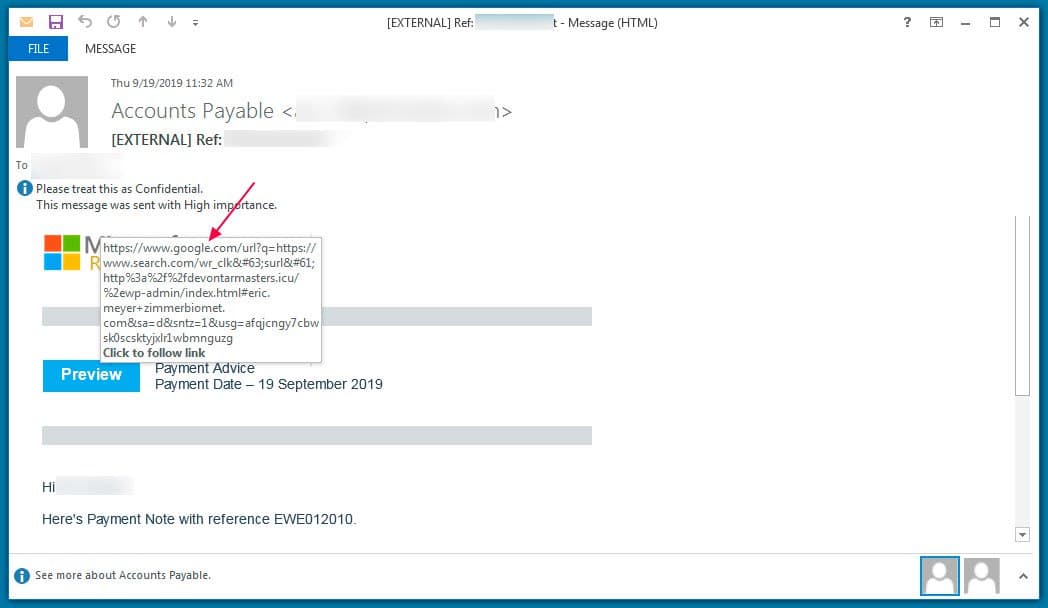
An example of Google open redirect is https://www.google.com/url?q=[url] that could be abused by attackers.

“Phishing campaigns commonly utilize open redirects from well known companies as they feel users will be more likely to click on a link if it belongs to Google or Adobe.” reported BleepingComputer.

Below an example of a phishing message that uses Google open redirect that points to a fake login page.

In a similar way, attackers could abuse the Adobe redirect service in phishing campaigns.

Experts suggest administrators and users remain vigilant on open redirects.

[adrotate banner=”9″] [adrotate banner=”12″]

Pierluigi Paganini

(SecurityAffairs – google open redirects, phishing)

[adrotate banner=”5″]

[adrotate banner=”13″]