
Europe Confirms Record €4.1B Penalty Against Google for Android Practices|U.S. CISA adds a Microsoft SharePoint Server flaw to its Known Exploited Vulnerabilities catalog|430,000 FortiGate Devices Exposed in FortiBleed Ransomware Link|Adobe fixed multiple maximum-severity flaws in ColdFusion and Campaign Classic|Alleged Scattered Spider Hacker Extradited to U.S. to Face Cybercrime Charges|Oracle E-Business Suite Flaw Under Active Attack, 950 Systems Exposed|Azure CLI Targeted in LSHIY Password Spray Campaign Across 64 Orgs|CISA Warns BlueHammer Flaw Is Now Exploited in Ransomware Attacks|RustDuck: The Botnet That’s Still Small but Engineering Like It Plans to Grow|GuardFall Flaw Hits 10 of 11 Popular Open-Source AI Agents|XSS.is, The Forum That Ran the Ransomware Supply Chain Is Down. The Market Isn’t|U.S. CISA adds SimpleHelp flaw to its Known Exploited Vulnerabilities catalog|Europe Confirms Record €4.1B Penalty Against Google for Android Practices|U.S. CISA adds a Microsoft SharePoint Server flaw to its Known Exploited Vulnerabilities catalog|430,000 FortiGate Devices Exposed in FortiBleed Ransomware Link|Adobe fixed multiple maximum-severity flaws in ColdFusion and Campaign Classic|Alleged Scattered Spider Hacker Extradited to U.S. to Face Cybercrime Charges|Oracle E-Business Suite Flaw Under Active Attack, 950 Systems Exposed|Azure CLI Targeted in LSHIY Password Spray Campaign Across 64 Orgs|CISA Warns BlueHammer Flaw Is Now Exploited in Ransomware Attacks|RustDuck: The Botnet That’s Still Small but Engineering Like It Plans to Grow|GuardFall Flaw Hits 10 of 11 Popular Open-Source AI Agents|XSS.is, The Forum That Ran the Ransomware Supply Chain Is Down. The Market Isn’t|U.S. CISA adds SimpleHelp flaw to its Known Exploited Vulnerabilities catalog|
Advertisement

Ad Placeholder

Full Width × 90

Uncategorized

A critical flaw in OpenPGP.js lets attackers spoof message signatures

A critical flaw in OpenPGP.js, tracked as CVE-2025-47934, lets attackers spoof message signatures; updates have been released to address the flaw. A critical vulnerability, tracked as CVE-2025-47934, in OpenPGP.js allowed spoofing of message signature verification. OpenPGP.js is an open-source JavaScript library that implements the OpenPGP standard for email and data encryption. It allows developers to […]

OpenPGP.js

A critical flaw in OpenPGP.js, tracked as CVE-2025-47934, lets attackers spoof message signatures; updates have been released to address the flaw.

A critical vulnerability, tracked as CVE-2025-47934, in OpenPGP.js allowed spoofing of message signature verification.

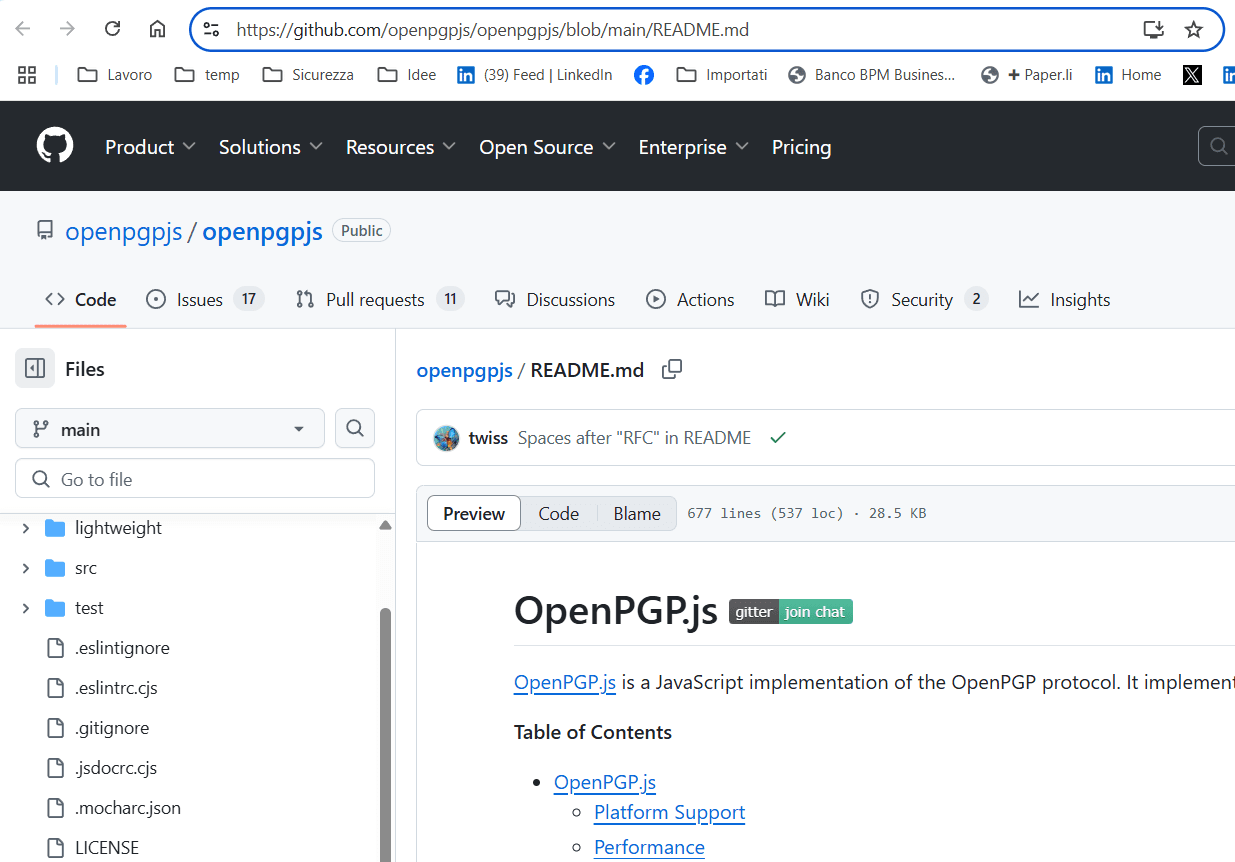
OpenPGP.js is an open-source JavaScript library that implements the OpenPGP standard for email and data encryption. It allows developers to integrate secure end-to-end encryption features directly into web applications, browser extensions, or server-side tools using JavaScript.

A critical flaw in OpenPGP.js versions 5.0.1 to 5.11.2 and 6.0.0 to 6.1.0 allows spoofing of inline-signed or signed+encrypted messages. Attackers can craft messages that return valid signature checks on data not actually signed, misleading recipients. Detached signatures are unaffected.

“This flaw allows signature verifications of inline (non-detached) signed messages (using openpgp.verify) and signed-and-encrypted messages (using openpgp.decrypt with verificationKeys) to be spoofed, since both functions return extracted data that may not match the data that was originally signed. Detached signature verifications are not affected, as no signed data is returned in that case.” reads the advisory. “In order to spoof a message, the attacker needs a single valid message signature (inline or detached) as well as the plaintext data that was legitimately signed, and can then construct an inline-signed message or signed-and-encrypted message with any data of the attacker’s choice, which will appear as legitimately signed by affected versions of OpenPGP.js.”

The vulnerability allows attackers to alter inline-signed or signed+encrypted messages to contain any content, while still appearing to have a valid signature.

Researchers Edoardo Geraci and Thomas Rinsma of Codean Labs discovered the vulnerability.

The issue is patched in 5.11.3 and 6.1.1, with workarounds available via manual signature checks.

Follow me on Twitter: @securityaffairs and Facebook and Mastodon

Pierluigi Paganini

(SecurityAffairs – hacking, CVE-2025-47934)


